


- Effect of sulfur spray gun on long cycle operation of device
Introduction
The sulfur-gun is the only channel for the liquid sulfur in the sulfur acid making plant to enter the sulfur burning furnace, and its health status is directly related to whether the device can run continuously. Because the sulfogun is a small static device on the device, it is less concerned about it. However, in the investigation of unplanned shutdown of sulfur acid making equipment, it is found that problems such as device shutdown, equipment corrosion and sublimation of sulfur caused by the fault of the sulfogun are also common.
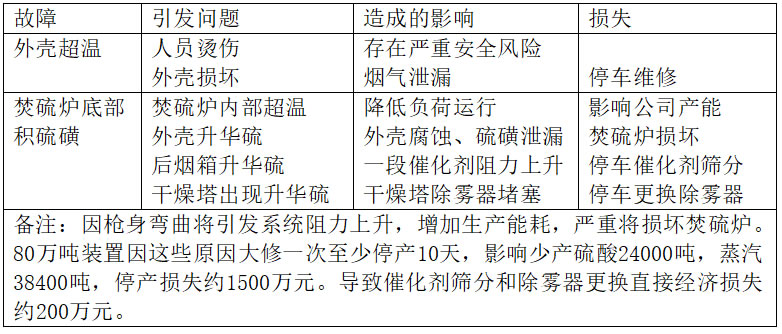
The following is an analysis of the influence of the fault of the sulfonate gun on the long cycle operation of the device.
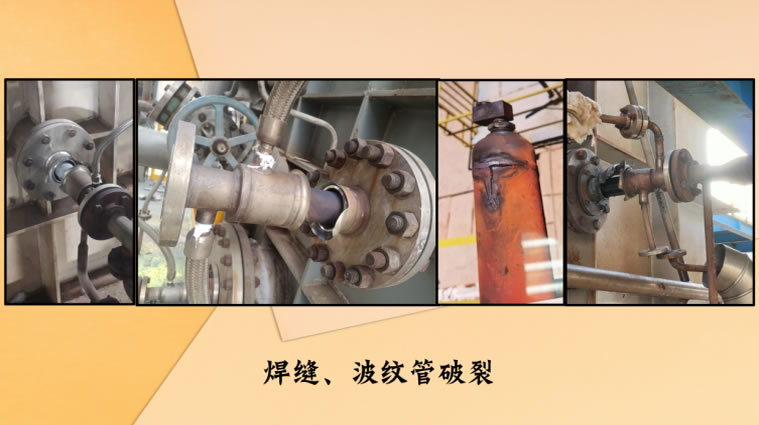
1. Weld, bellows break

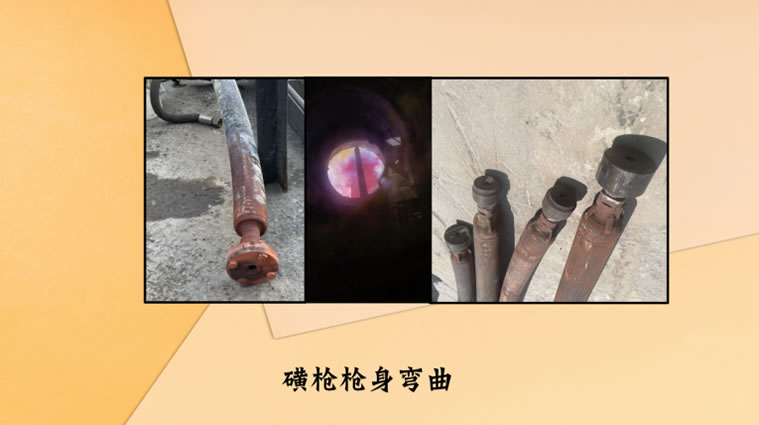
2. Gun body bending
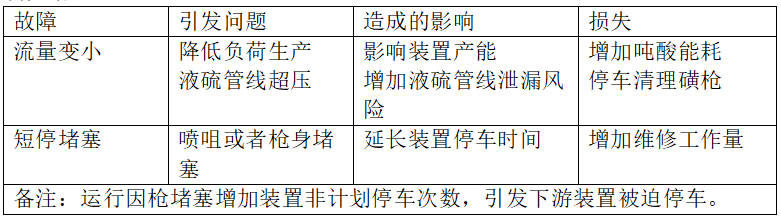
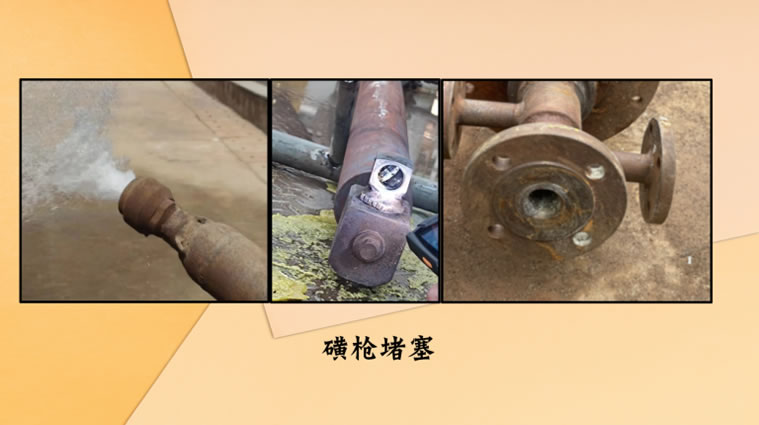
3. Gun blockage
4. Hollow atomization, liquid sulfur dripping
You ask me answer
You ask: What is the cause of a catalyst resistance rise?
I answer: The rise in resistance is mainly caused by the massive iron oxide.
You ask: Where does the converter's iron oxide come from?
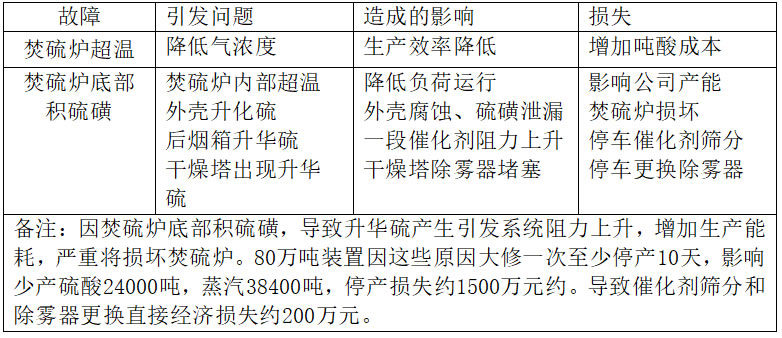
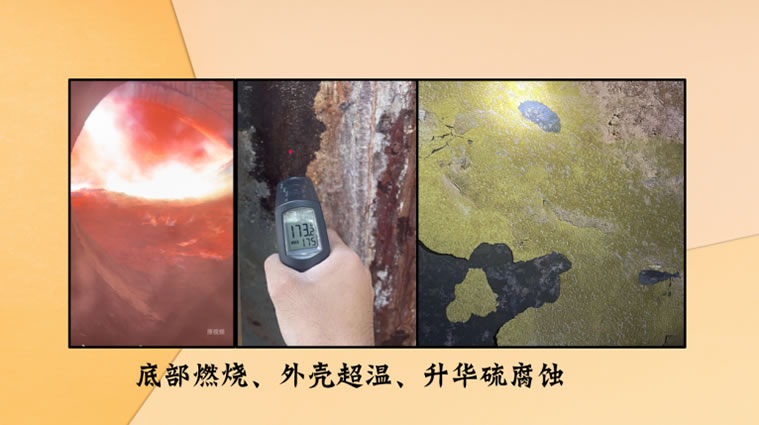
I answer: Due to poor atomization of the sulfonator gun, sulfur accumulates at the bottom of the sulfur-burning furnace and the liquid sulfur generated is blown to the furnace tail under the action of wind, and the liquid sulfur is baked at high temperature to become sublimed sulfur. As the oxygen content in the furnace tail is low, about 10%, there will be backward combustion and slow combustion, and the sublimed sulfur without combustion is attached to the fire tube and the rear flue gas box. Some of the sulfur goes directly through the high-temperature bell valve to a section of the inlet pipe to become sulfur, and these are metal materials containing iron, sulfur and iron are heated to form iron sulfide, and iron sulfide reacts with oxygen to form iron trioxide. Therefore, every inspection can find a large number of black blocks in the catalyst layer of a section of the converter, which is iron trioxide.